
- Why Privacy Matters for Home – Based Businesses
- Risks of Using Your Home Address as a Business Address
- Legal & Compliance Concerns Every Home – Based Business Should Know
- The Psychological & Professional Impact of Protecting Your Privacy
Q: Why shouldn’t I use my home address for my business?
A: Because it makes your personal details public, leaving you vulnerable to lawsuits, unwanted visitors, identity theft, and a loss of professional credibility.
Running a business can grant you autonomy, flexibility, and more free time to do what you love – but when it comes to privacy and separation between business and personal life, where’s the line drawn?
For millions of entrepreneurs, freelancers, and small business owners, the home office is the main workplace. In fact, according to the U.S. Small Business Administration, about 50% of all small businesses in the U.S. are home – based. The appeal is obvious: you avoid expensive office leases, skip the commute, and enjoy the saved time to run errands.
But here’s the problem with having your business address as your home address: privacy is compromised, leaving your safety and professional image at risk. You need privacy when running a business from home.
When you register your LLC, apply for business licenses, or create online accounts, your residential address may end up in public databases.
That means anyone – clients, competitors, or complete strangers – can look up where you live. That’s not exactly a great feeling.
This isn’t just a minor inconvenience. It can expose you to privacy risks, legal complications, and credibility issues.
In this guide, we’ll also dive into:
- Practical solutions like PO Boxes, UPS mailboxes, and virtual offices
- Why virtual office addresses are the best long – term solution
- How Alliance Virtual Offices helps protect entrepreneurs like you
Why Privacy Matters for Home – Based Businesses
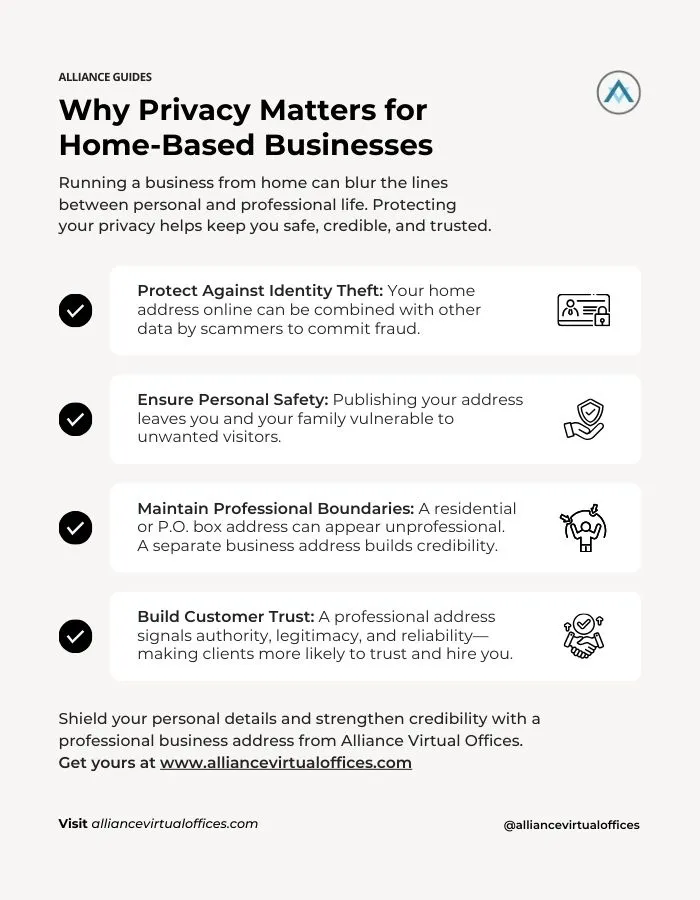
When you’re taking calls and doing busy work from your living room and spare bedroom right after rolling out of bed, you’re not likely to remember that you’re technically a public – facing entity.
1. Protecting Against Identity Theft
Your home address can end up online, making it susceptible to scammers. Scammers and hackers often combine your address with other publicly available data (like your date of birth or phone number) to commit identity theft or fraud.
2. Ensuring Personal Safety
If your address is listed on your website, contracts, or state registry, you aren’t protected from an unhappy customer showing up at your door. If you have family or dependents that live with you, they’re also vulnerable to potential offences as well.
3. Maintaining Professional Boundaries
Imagine a client Googling your business and realizing it’s registered to an apartment complex, or worse, a P.O. box. Clients may see this as a lack of professionalism and avoid working with you. Keeping your home business address private ensures that you have clear lines between your personal and professional life, leading clients to believe you’re trustworthy, credible, and up to code.
4. Building Customer Trust
While professionalism can be a dubious term, in essence, it really means creating and building an image of authority, legitimacy, and knowledge in your chosen profession. A professional address is the container for that authority and signals that you’re worthy of being paid, while a residential address can spark doubt, fear, and controversy.
While your home address may be saving you money, it can cost you more down the line in lost clientele, potential legal issues, and safety violations.
Risks of Using Your Home Address as a Business Address
Home business address privacy might not be on your mind at first. But the moment you formalize your business, that choice can spiral into unintended consequences. In a world rife with litigation, your small business address protection is more vital than ever.
Public Databases Make It Easy to Find You
- State Business Registries: Many states (like California and Texas) publish LLC and corporation filings online, including your registered address.
- Domain Registrations: If you don’t purchase WHOIS privacy for your website, your home address becomes visible to anyone who searches your domain.
- Marketing & Data Aggregators: Many online directories, data brokers, and marketing platforms scrape business registration records and automatically publish them. This means your home address can end up on sites like Yelp, Yellow Pages, or even data – selling platforms, without you ever submitting it yourself.
Legal Exposure
- Your home could be the address served for lawsuits or subpoenas. One day you’re cooking lunch, and the next you’re being handed papers at your front door.
- Creditors may send correspondence directly to your personal residence. Not a great place to get your business mail, especially where other people can access it.
Credibility Issues
- A prospective client receiving an invoice with a residential address may second – guess your business’s stability.
- If you’re in industries like law, finance, or healthcare, a residential listing can even deter partnerships.
NEXT STEPS: Why You Shouldn’t Use Your Home Address for Business
Legal & Compliance Concerns Every Home – Based Business Should Know
Here’s the tricky part: while you can often use your home address for business registration, it can create headaches later on. What feels simple today may turn into compliance issues tomorrow.
LLC and Corporation Formation
When you register an LLC or corporation, most states require you to list a physical street address on your Articles of Organization. A P.O. Box usually won’t cut it.
Why? Because state agencies want to ensure they can reach you with official documents. Some states even publish this information on their public database – meaning your home address is visible to anyone who looks up your business.
If you ever need to change that address later, you’ll likely need to file an amendment with the state and pay a fee. That’s extra paperwork and extra cost.
Business Licensing
If your business requires a professional license or permit, the rules can be even stricter.
- Healthcare providers may need a commercial address to comply with HIPAA and local licensing boards.
- Food and beverage businesses often face zoning restrictions that prohibit residential kitchens from doubling as commercial operations.
- Transportation companies applying for DOT or FMCSA numbers need a verifiable business address to remain compliant.
Even if your industry doesn’t seem heavily regulated, many cities and counties require a business license – and they may not approve a residential address.
Tax Correspondence
The IRS and state tax authorities send critical documents by mail: audit notices, filing reminders, compliance updates, even refund checks. If those are going to your home address, there are two big risks:
- Important mail can get lost in a stack of personal bills or junk mail.
- If you move homes, you risk missing essential tax correspondence during the transition.
A missed IRS notice could mean late penalties or unnecessary stress – all because your business and personal mail weren’t kept separate. You need solid business privacy solutions that result in peace of mind and tax compliance.
Service of Process
Here’s the one many entrepreneurs don’t think about: what happens if your business gets sued?
By law, lawsuits and subpoenas must be served to your official business address. If that address is your house, you could have a process server knocking on your door in front of your neighbors, family, or clients. It’s uncomfortable, embarrassing, and potentially disruptive to your personal life.
With a virtual office for home businesses, legal notices are received on your behalf at a secure business location – keeping your personal space off – limits.
Related: How to Get a Virtual Business Address for LLC Registration
The Psychological & Professional Impact of Protecting Your Privacy
Beyond compliance, there’s a human element to protecting your privacy.
Work – Life Balance
Keeping your home address private preserves the invisible boundary between where you work and where you live. Privacy when running a business from home is essential for entrepreneurs juggling multiple roles.
Family & Personal Safety
It’s not just about you – it’s about anyone who shares your home. Spouses, kids, or roommates shouldn’t be involuntarily exposed to your business dealings.
Professional Image
A commercial business address boosts your credibility instantly. Clients are far more likely to trust a business that operates out of “123 Main Street, Suite 400” than “Apartment #7B.”
Related: The Importance of a Professional Business Address
Practical Solutions for Maintaining Privacy
If you want to keep your home address private for business, here are your main options:
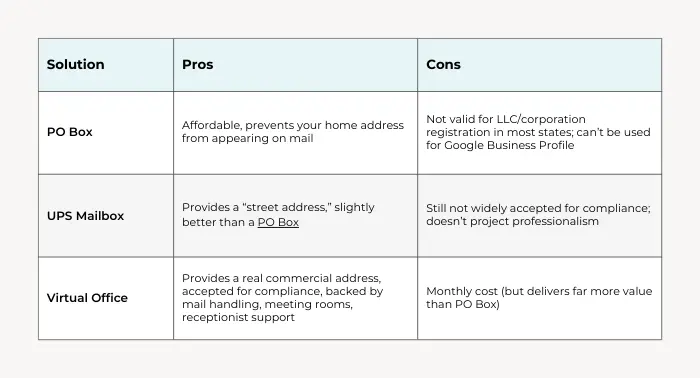
Read more: Virtual Office vs. PO Box: What’s the Difference?
Why Virtual Office Addresses Are the Best Long – Term Solution
If you’re serious about keeping your home address private while still looking professional, a virtual office address is hands down the smartest option.
Unlike quick fixes like PO Boxes or UPS mailboxes, a virtual office gives you the privacy you need and the credibility your business deserves – without draining your budget.
Here’s why it works so well for home – based entrepreneurs:
1. Professional Presence Without the Lease
Instead of listing “123 Maple Street, Apt 2B” on your business paperwork, imagine showing “123 Main Street, Suite 400.” Big difference, right?
A virtual office gives you a real, commercial address, the kind you’d find in office towers and coworking hubs, without paying thousands of dollars in rent.
Clients and partners see your business as established and trustworthy, while you get to skip the hassle of a long – term lease.
- This instantly elevates your professional image because you have privacy when running a business from home.
- Clients, investors, and partners see your business as established, not temporary.
- You avoid the financial burden of a multi – year lease while still gaining credibility.
2. Compliance – Friendly
One of the biggest perks? A virtual office address works for the things that really matter:
- Registering your LLC or corporation
- Applying for business licenses and permits
- Handling IRS paperwork and opening a business bank account
It’s a huge relief knowing your address won’t cause problems with state filings or government forms.
3. Protects Privacy While Supporting Growth
A virtual office lets you separate your personal life from your professional one. Your home stays private, while your business projects strength and security.
At the same time, you can expand into new markets by selecting an address in another city or state, without moving or renting office space.
No more business mail piling up in your mailbox with the threat of it being stolen or read. It’s a win – win.
4. Built – In Mail Handling
Your business needs a reliable place to receive critical mail:
- IRS tax documents
- State compliance reminders
- Banking correspondence
- Client payments or contracts
Think about all the important mail your business gets: tax documents, compliance notices, bank statements, contracts.
With a virtual office, trained staff receive everything securely, and you decide how to handle it – pick it up, forward it, or even get it scanned and sent digitally.
It’s organized, reliable, and saves you from mixing business with personal mail.
5. Room to Grow (Literally)
Here’s where a virtual office really shines: it grows with you.
Need to host a client meeting? You can book a professional meeting room at your address. Want a desk or a team space outside the house? That’s available too. Need someone to answer your calls? Add a live receptionist.
You can start small with just an address, then build on it as your business takes off.
6. Scalable With Your Business Growth
Alliance Virtual Offices has more than 1,400 locations worldwide, which means you’re not tied down to your home city.
You can test new markets, open up in different states, or give your business a presence in a major city, all without moving or renting new space.
What starts as a mailing address can grow into a full business hub. Many providers, including Alliance Virtual Offices, provide:
- On – demand meeting rooms for client presentations.
- Coworking desks and team rooms when you need a place to work outside home.
- Live receptionist services to answer calls, schedule appointments, and project professionalism.
This scalability means your virtual office grows with you – without the need to relocate or sign long leases.
7. Cost – Effective and Predictable
Leasing even a small office can cost anywhere from $500 to $2,000 per month in many U.S. cities. That doesn’t even include utilities, furniture, and insurance.
By contrast, a virtual office plan typically starts at less than $45/month. For that price, you gain privacy, compliance, credibility, and optional upgrades whenever you’re ready.
How Alliance Virtual Offices Helps Protect Privacy for Entrepreneurs
At Alliance Virtual Offices, we’ve helped thousands of entrepreneurs protect their home addresses and build credibility.
Here’s how we do it:
- 1,400+ Global Locations: Choose an address near home – or in a new city where you want to expand.
- Mail Handling & Forwarding: Professional staff receive and forward your mail securely.
- On – Demand Meeting Rooms & Workspaces: When you need to meet clients, you’ll have a polished, professional environment.
- Live Receptionist Add – Ons: Project professionalism with a trained receptionist answering your calls.
- Case Study Example: One consultant in Houston switched from her home address to an Alliance virtual office. Within a month, she was able to open a new bank account, register with the state, and land two new clients, because her professional image improved.
Business privacy matters, but so does growth with the right infrastructure, too.
Take the Next Step Toward Privacy and Credibility
Your home should remain personal. Your business deserves its own identity.
Using your home address might feel convenient, but it exposes you to legal risks, safety concerns, and credibility challenges. A virtual office address offers the perfect solution: safety, compliance, professionalism, and scalability at an affordable price.
Protect your privacy and upgrade your business image today – explore Alliance Virtual Offices.