
- Why Multi-City Expansion Fails Without Local Presence
- What “Local Presence” Really Means for Contractors
- Step-by-Step: Establish Local Presence Before You Hire
- Licensing, Compliance, and Risk Management
Q: Why is establishing local presence critical before hiring when expanding a contracting business into a new city?
A: Establishing local presence first allows contractors to operate credibly and compliantly in a new market without taking on unnecessary risk. A legitimate local business address, local phone handling, and online visibility support licensing, permits, insurance, and SEO, while building trust with homeowners, commercial clients, and municipalities.
This foundation improves lead quality and conversion rates, enables contractors to test demand, and reduces the financial risk of hiring employees or signing leases before revenue in the new city is proven.
Expanding into a new city is one of the most significant growth milestones for a contracting business. It often begins the same way: you secure a project outside your home market, receive a referral from a nearby city, or are asked by a commercial client whether you can support work across multiple locations.
The opportunity is legitimate, the potential revenue is attractive, and the pressure to move quickly can be intense. This is also where many contracting businesses make costly mistakes.
In an effort to keep momentum, they hire employees too early, sign leases they do not yet need, or begin operating in a new market without a legitimate local footprint. Over time, these decisions lead to missed calls, licensing delays, weak online visibility, and a loss of trust among clients who expect contractors to have a real presence in their city.
Contractors who scale successfully take a more deliberate approach. Instead of rushing into permanent commitments, they establish local presence first and invest in hiring and physical space only after demand in the new market has been proven.
This guide explains how to do exactly that. It outlines a practical, step-by-step framework for expanding into new cities with credibility, reduced risk, and the flexibility to scale at the right pace.
Thinking about expanding into a new city?
See how contractors use legitimate business addresses to establish local presence before hiring or signing leases.
Explore virtual office locations →
Get Your FREE Guide Today!
How to Start a Business in a Recession

Why Multi-City Expansion Fails Without Local Presence
Most failed expansions don’t fail because of workmanship.
They fail because the business infrastructure wasn’t ready.
When contractors move into new markets without local presence, the same problems show up again and again.
Missed calls and lost leads
If your business only has one central phone line or no local call handling, leads in new cities fall through the cracks. Customers expect fast answers and local responsiveness. When they don’t get it, they move on.
No legitimate address for licensing or permits
Many cities and states require a verifiable business address for contractor licensing, insurance documentation, bonding, and permits. PO boxes and informal arrangements don’t meet those standards.
Trust gaps with homeowners and commercial clients
Clients want to know you’re real, reachable, and accountable in their city. A contractor who “serves the area” but can’t meet locally or verify an address often loses bids to competitors who look established.
Over-hiring too early
Hiring full-time employees before demand stabilizes increases payroll risk and operational stress. Many contractors lock themselves into overhead before the market has proven itself.
Local presence isn’t a nice-to-have. It’s the foundation that everything else sits on.
What “Local Presence” Really Means for Contractors
Local presence isn’t about trucks parked on job sites or a crew passing through town.
For contractors, true local presence includes several specific components.
A legitimate local business address
This address must be suitable for licensing, insurance, banking, and official correspondence. It needs to be a real, staffed commercial location, not a PO box or mailbox store.
Local phone presence with live answering
Customers expect to speak with someone who understands their city and can respond quickly. Live call handling dramatically improves lead capture and conversion.
Ability to meet clients locally when needed
Even if most work happens on site, the ability to meet clients, inspectors, or partners in professional space matters—especially for commercial bids and municipal work.
City-specific branding and SEO signals
Professional social media profiles, citations, and local landing pages rely on consistent address and phone data. Without it, your visibility stays limited.
Administrative footprint without a full lease
You need presence, not a permanent office. Flexibility matters when markets are still being tested.
One important clarification:
Trucks do not equal presence. PO boxes do not equal compliance.
Local presence is about legitimacy, accessibility, and visibility.
Not sure what qualifies as a legitimate business address in a new market?
Here’s what contractors need to know about business address requirements before expanding.
Learn what qualifies →
Step-by-Step: Establish Local Presence Before You Hire
Smart expansion follows a clear sequence. The goal is to build credibility and infrastructure before committing to long-term costs.
Step 1: Secure a compliant local business address
Your first move into a new city should be securing a legitimate business address that meets regulatory and operational requirements.
This address supports:
- Contractor licensing and renewals
- Insurance and bonding documentation
- Banking and vendor relationships
- Google Business Profile verification
A virtual office from Alliance Virtual Offices provides a real street address in a staffed business center, which is critical for contractors expanding into regulated markets.
Step 2: Set up city-specific phone handling
Local phone presence signals responsiveness and trust.
Using a local number with live receptionist services ensures:
- Calls are answered during business hours
- Leads are routed correctly
- No opportunities are lost during busy periods
This is especially important for HVAC, plumbing, and restoration businesses where response time directly impacts conversion.
Step 3: Set up local search and visibility correctly
Once you have a legitimate business address and local phone infrastructure in place, you can begin building local visibility for the new market. For many contractors, this includes evaluating whether a Google Business Profile is appropriate based on their business model, service area rules, and Google’s current guidelines.
When structured correctly, local search visibility helps support:
- Stronger local discovery in search results
- Increased credibility for customers researching providers in their area
- Long-term review and reputation building
Contractors should treat local search setup as part of a broader visibility strategy, ensuring all address and phone information is accurate, consistent, and aligned with platform policies.
Step 4: Launch local landing pages and citations
Each new market should have its own city-specific landing page with consistent NAP (name, address, phone) data.
This reinforces:
- SEO authority
- Brand legitimacy
- Conversion confidence for local customers
Step 5: Test demand before hiring employees
With presence established, you can now test demand safely.
Many contractors use:
- Subcontractors
- Traveling crews
- Project-based labor
This allows you to evaluate volume and profitability before committing to full-time hires.
Example: HVAC contractor
An HVAC company expanding into a nearby metro sets up a local address, phone answering, and GBP. They run calls through subs for three months, track volume, then hire once weekly demand stabilizes.
Example: Electrical contractor
An electrical firm uses a virtual office to meet permitting requirements and win commercial bids, without leasing space until a long-term contract is secured.
Planning expansion into one or more new cities?
See which Alliance Virtual Offices locations support contractor licensing, mail handling, and professional presence.
Find locations →
Licensing, Compliance, and Risk Management
Contracting businesses face more regulatory complexity than many other service businesses.
Local presence plays a direct role in staying compliant.
State vs city licensing requirements
Some states issue licenses statewide. Others require city-specific registration or proof of local address. Municipalities often require verifiable locations for permit applications.
Why addresses matter for permits and insurance
Insurance carriers and bonding companies frequently require a physical business address tied to the service area. This is about accountability and risk management.
Nexus, tax exposure, and regulatory optics
Establishing operations in new states can create tax nexus. Having a structured, legitimate presence helps manage regulatory optics and avoid red flags.
How virtual offices support compliance without leases
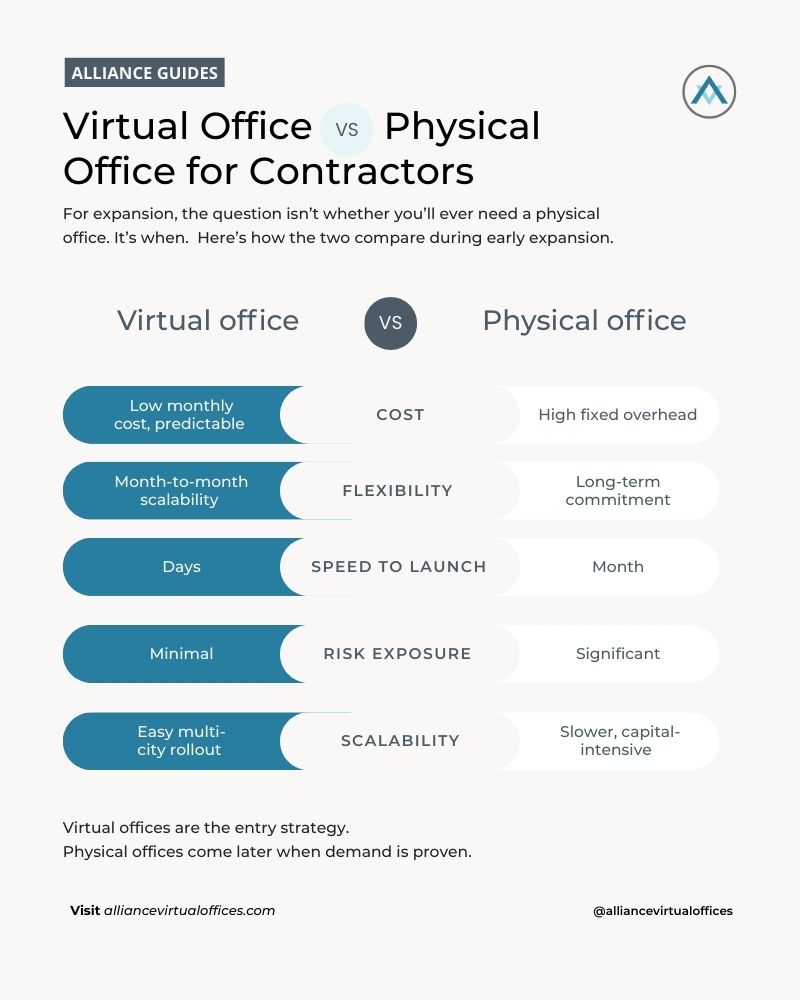
Virtual offices provide the documentation and legitimacy regulators expect, without locking contractors into long-term real estate commitments. This flexibility is especially valuable during early market entry.
Expanding across city or state lines adds regulatory complexity.
Learn how contractors use virtual offices to support licensing and documentation without locking into long-term leases.
See how it works →
How Local Presence Impacts Trust, SEO, and Lead Conversion
Local presence doesn’t just satisfy regulators. It directly affects revenue.
Homeowner and commercial trust
Clients feel more confident hiring contractors who appear established in their city. A local address and phone number reduce perceived risk.
Bid acceptance and RFP success
Commercial clients and municipalities often require proof of local operations. Contractors with credible presence win more bids.
Call conversion rates
Calls answered live convert significantly better than missed or delayed callbacks. Local phone handling improves close rates.
SEO and visibility advantages
Verified addresses, consistent citations, and active online platforms dramatically improve local search performance. Presence makes you findable.
Local trust starts before the first call.
Understand how business addresses influence visibility, credibility, and lead quality in new markets.
Read about address and SEO →
When Should You Hire Locally?
Hiring locally is a milestone, not a starting point.
Signs you’re ready include:
- Consistent inbound leads in the city
- Repeat customers or long-term contracts
- Increasing reliance on subcontractors
- Stable monthly revenue
Many contractors use hybrid models – subs first, employees later—to scale responsibly.
How Alliance Virtual Offices Helps Contractors Scale
Alliance Virtual Offices was built for businesses that need to expand without unnecessary risk.
For contractors, this means:
- Business addresses in 1,400+ cities
- Real street addresses in staffed centers
- Live receptionist services for call handling
- On-demand meeting rooms for client meetings
- Month-to-month scalability as markets grow
This allows contractors to establish legitimate local presence quickly, test new markets, and scale with confidence, without overcommitting to payroll or leases.
Build Presence First, Then Scale
Multi-city growth doesn’t fail because contractors lack skill.
It fails because they expand without foundation.
Local presence is that foundation.
When you establish credibility, visibility, and compliance first, everything else becomes easier: hiring, bidding, SEO, and long-term growth.
The smartest contractors don’t rush into leases or payroll.
They build presence first. Then they scale profitably.
Ready to expand without overcommitting?
Talk with an Alliance Virtual Offices advisor about establishing local presence in your next market before you hire or lease.
Recommended Reading
Does Your Business Need a Physical Address? What the Law Actually Requires
https://www.alliancevirtualoffices.com/virtual-office-blog/does-your-business-need-a-physical-address/
What To Expect: A practical breakdown of when a business address is legally required, what qualifies as a legitimate address, and why PO boxes and informal setups often fall short for licensing, insurance, and official use.
Virtual Office Address and SEO: What Really Impacts Local Visibility
https://www.alliancevirtualoffices.com/virtual-office-blog/virtual-office-address-and-seo/
What To Expect: Explains how business addresses influence search visibility, citations, and trust signals, and what contractors should understand about local SEO when expanding into new markets.
Business Address Requirements: What Service Businesses Need to Know
https://www.alliancevirtualoffices.com/virtual-office-blog/business-address-for-online-store/
What To Expect: Covers how service-based businesses use business addresses for registration, permits, customer trust, and operational setup, with guidance that applies directly to contractors entering new cities.